
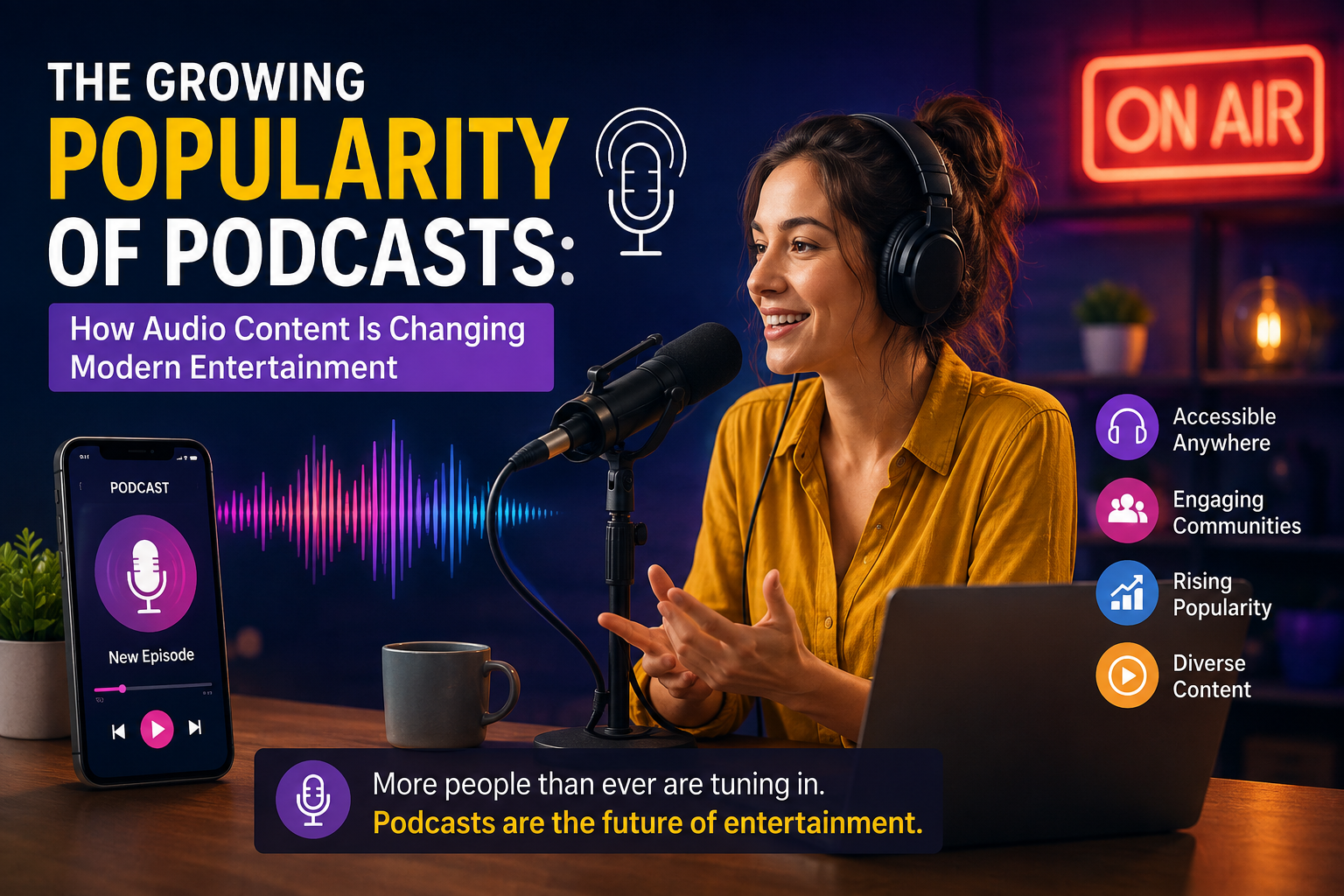
Podcasts have become one of the most popular forms of digital entertainment and information sharing. What began as a relatively niche format has developed into a major part of the modern media landscape. People now listen to podcasts while commuting, exercising, working, cooking, relaxing, or simply spending time at home.
The appeal of podcasts comes from their flexibility. Unlike traditional television programs, listeners do not need to remain in front of a screen. They can choose a topic, select an episode, and listen whenever it is convenient for them.
Podcasts are available across a wide range of categories, including entertainment, education, business, technology, sports, lifestyle, storytelling, interviews, personal development, culture, and news. This variety has allowed podcasts to attract audiences with very different interests.
Understanding the Rise of Podcasts
A podcast is a digital audio program that is usually released in episodes. Some podcasts are produced as ongoing series, while others may have a limited number of episodes.
Easy Access Has Increased Popularity
One of the biggest reasons behind the growth of podcasts is accessibility.
Listeners can discover programs through podcast applications, websites, streaming services, and other digital platforms. Many episodes can be accessed through smartphones, making podcasts convenient for people with busy schedules.
Listeners Can Choose Their Own Topics
Traditional broadcasting generally follows a fixed schedule.
Podcasts offer greater flexibility because listeners can choose what they want to hear. Someone interested in entrepreneurship can select business discussions, while another person can listen to sports analysis, comedy, history, or storytelling.
This personalized experience is an important reason for the medium's growth.
Podcasts Offer a Different Kind of Entertainment
Podcasts have created a unique space between traditional radio, television, and digital media.
Conversations Feel More Personal
Many podcasts feature long-form conversations between hosts and guests.
Unlike short social media content, podcasts can allow people to explore a topic in greater detail.
Listeners may hear personal stories, professional experiences, opinions, challenges, and lessons from guests.
Storytelling Keeps Audiences Engaged
Storytelling podcasts can take listeners through real or fictional narratives.
Well-produced stories can use narration, sound effects, music, and interviews to create an immersive listening experience.
This format demonstrates that entertainment does not always require visual content.
The Growth of Educational Podcasts
Podcasts are increasingly being used for learning.
Learning While Multitasking
One major advantage of audio education is that it can be consumed while doing other activities.
People can listen to educational discussions while traveling, walking, exercising, or completing routine household tasks.
This can make learning more flexible.
Wide Range of Educational Topics
Educational podcasts cover subjects such as history, science, language learning, psychology, technology, finance, business, literature, and culture.
Experts and educators can use podcasts to explain complicated topics in conversational formats.
Podcasts and Professional Development
Podcasts have also become useful for professionals.
Business and Entrepreneurship Content
Entrepreneurship podcasts often discuss business ideas, leadership, marketing, innovation, customer experience, and professional challenges.
Listening to experienced professionals can expose audiences to different perspectives on business.
Career and Skill Development
Professionals can also find podcasts focused on communication, productivity, technology, management, creativity, and industry-specific knowledge.
While podcasts cannot replace formal education or practical training, they can complement other learning methods.
Podcasts Have Created New Opportunities for Creators
The growth of podcasting has opened opportunities for independent creators.
Anyone Can Develop a Show
Traditional broadcasting often required access to professional studios and large production teams.
Today, creators can begin with relatively simple recording equipment and digital tools.
A successful podcast still requires planning, consistency, quality, and audience understanding, but the entry barriers can be lower than those associated with traditional media.
Personal Branding Through Podcasts
Podcasts can help creators build a recognizable personal identity.
A host can share knowledge, interview professionals, discuss experiences, or explore specific topics.
Over time, consistent content can help create a community of listeners around the show.
The Importance of Good Podcast Production
Although podcasts are accessible to create, quality remains important.
Clear Audio Matters
Poor sound quality can make a podcast difficult to follow.
Good microphones, appropriate recording environments, and basic audio editing can significantly improve the listening experience.
Strong Episode Structure
A podcast should have a clear structure.
Hosts can introduce the topic, guide the conversation, ask relevant questions, and summarize important points.
A well-organized episode can keep listeners engaged throughout the discussion.
The Role of Social Media in Podcast Growth
Social media has become an important promotional channel for podcasts.
Short Clips Attract New Listeners
Creators can share short clips from longer episodes on social platforms.
A useful or entertaining moment can encourage viewers to explore the complete episode.
Building an Online Community
Podcast hosts can interact with audiences through comments, posts, polls, live sessions, and other online activities.
This interaction can strengthen the relationship between creators and listeners.
Video Podcasts Are Expanding the Format
Although podcasts traditionally focused on audio, video podcasting has become increasingly popular.
Visual Conversations
Some podcast creators record their conversations on video and publish them on video platforms alongside audio versions.
This allows audiences to observe facial expressions, body language, studio environments, and guest interactions.
One Conversation, Multiple Formats
A single podcast recording can be transformed into several types of content.
Creators can publish the complete audio episode, full video, short clips, quotations, photographs, and promotional posts.
This makes podcast production useful for broader content strategies.
Podcasts and the Entertainment Industry
Celebrities, actors, musicians, athletes, creators, and other public personalities have increasingly participated in podcast interviews.
Audiences See Different Sides of Public Figures
Traditional interviews are often short and focused on specific promotional activities.
Longer podcast conversations can provide more time for guests to discuss their careers, experiences, interests, and personal perspectives.
This can make audiences feel more connected to public personalities.
Podcasts Can Support New Talent
Podcasts can also provide opportunities for emerging creators.
A new host does not necessarily need to be a well-known celebrity to build an audience. A strong concept, engaging personality, useful information, or distinctive storytelling approach can help a program attract listeners.
Podcasts and the Business World
Companies have also started exploring podcasts as communication and marketing tools.
Brands Can Share Knowledge
A business can create podcast content around its industry, customers, products, trends, or professional insights.
Educational and informative content can help a brand demonstrate expertise without relying only on traditional advertising.
Interviews Can Build Industry Connections
Companies can invite experts, partners, customers, and professionals to participate in discussions.
These conversations can introduce audiences to different perspectives while also expanding professional networks.
Podcasts and Niche Communities
One of the greatest strengths of podcasting is its ability to serve specific interests.
Small Audiences Can Still Be Valuable
A podcast does not necessarily need millions of listeners to be meaningful.
A program focused on a specific hobby, profession, language, regional culture, or specialized subject can build a dedicated community.
This makes podcasting attractive for creators who want to focus on depth rather than mass appeal.
Communities Encourage Discussion
Listeners can discuss episodes, share recommendations, suggest guests, and participate in online communities.
This creates a two-way relationship between creators and audiences.
Challenges Faced by Podcast Creators
Despite the opportunities, podcasting is competitive.
Discoverability Can Be Difficult
Thousands of new episodes are published regularly.
New creators may find it challenging to make their shows visible among established programs.
Strong titles, clear descriptions, consistent publishing, useful topics, and effective promotion can help improve discoverability.
Consistency Requires Commitment
Producing a podcast regularly involves research, recording, editing, publishing, promotion, and audience management.
Creators need to develop realistic schedules that they can maintain over time.
The Future of Podcasting
The podcast industry is likely to continue evolving.
Artificial intelligence may assist creators with tasks such as transcription, editing, translation, content organization, and accessibility.
Video integration may also become more common as audiences increasingly consume conversations through multiple formats.
At the same time, the core appeal of podcasting is unlikely to disappear.
People enjoy hearing real voices, personal stories, expert conversations, humor, and thoughtful discussions.
Podcasts Are Becoming More Accessible
Technology may also make podcasts easier to access for people who speak different languages or have different accessibility needs.
Transcriptions, captions, translations, and improved audio tools can help more audiences engage with podcast content.
This can expand the reach of creators while making digital audio more inclusive.
Conclusion
The rise of podcasts reflects a broader change in the way people consume entertainment and information.
Podcasts offer flexibility, variety, personal conversations, educational opportunities, and access to specialized communities. They allow listeners to choose content according to their interests and consume it according to their schedules.
For creators, podcasting provides an opportunity to build audiences, develop personal brands, share knowledge, interview interesting people, and explore creative ideas.
As technology continues to develop, podcasts will likely become even more connected with video, social media, artificial intelligence, and other digital platforms. However, their greatest strength will remain the same: the ability to tell stories and share ideas through the power of conversation and sound.
From entertainment and education to business and personal storytelling, podcasts have established themselves as an important part of modern media and are likely to remain a growing form of digital content for years to come.